Reconstitution and Storage: What the Stability Data Shows
In lyophilized (freeze-dried) form, most research peptides are stable for many months when kept cold and dry. Reconstitution changes that: once a peptide is in solution, hydrolysis, oxidation, and aggregation can proceed, and temperature is the biggest lever on how fast.[1]
Temperature sets the pace
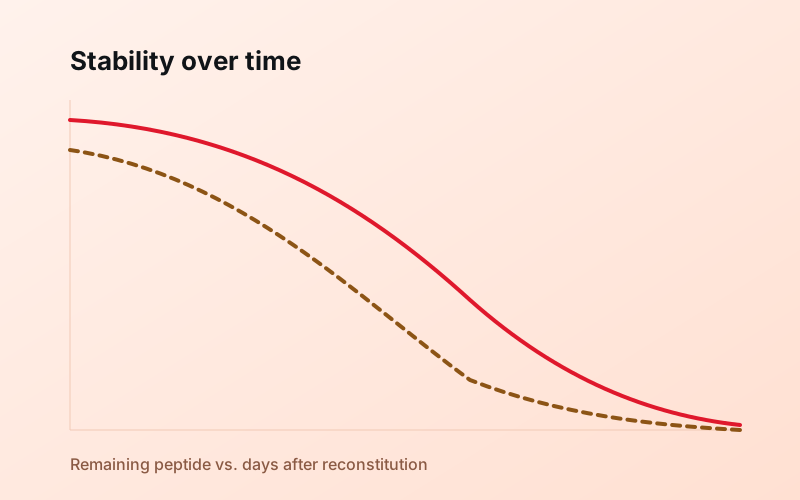
The chart below contrasts a reconstituted peptide held refrigerated (~4 °C) against one left at room temperature (~22 °C). Both start at full potency; the room-temperature sample loses measurable content far faster.
Practical handling
- Reconstitute with an appropriate sterile diluent, adding it slowly down the vial wall rather than directly onto the pellet.[2]
- For anything beyond short-term use, aliquot and freeze to avoid repeated freeze–thaw cycles on the whole stock.
- Keep working solutions cold and protected from light; minimise time at room temperature.
Exact stability is sequence-dependent — peptides with methionine, cysteine, or N-terminal glutamine behave differently — so treat curves like the one above as directional, not a substitute for lot-specific data. See our companion piece on reading a certificate of analysis for where stated storage conditions appear on documentation.
For research use only. Not for human or veterinary use. This article is educational and does not constitute analytical, medical, or regulatory advice.
References
- Manning, M. C., et al. "Stability of Protein Pharmaceuticals: An Update." Pharmaceutical Research. link.springer.com.
- United States Pharmacopeia. "<1503> Quality Attributes of Synthetic Peptide Drug Substances." usp.org.