What Is GHK-Cu? The Copper Peptide Explained
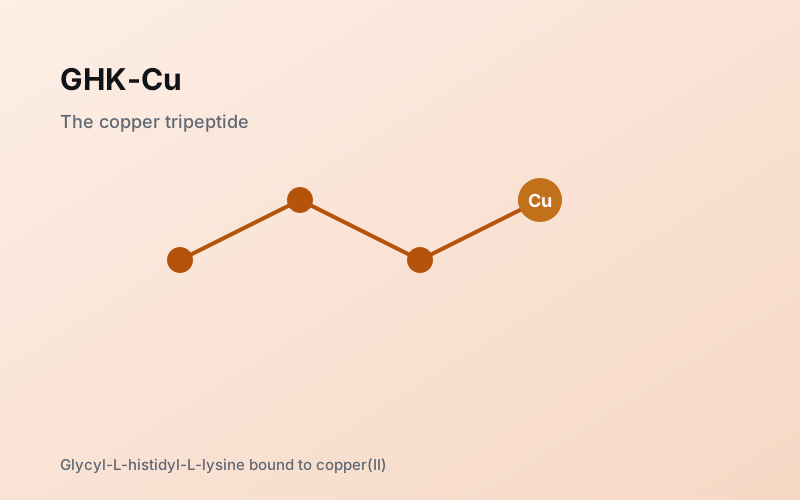
GHK-Cu is unusual among research peptides for two reasons: it occurs naturally in the human body, and it carries a copper ion as part of its structure. That combination is why it has one of the deeper research literatures of any peptide in a catalogue — much of it in skin biology and wound repair.[1]
What the molecule is
GHK stands for its three amino acids: glycine, histidine, and lysine (Gly-His-Lys). On its own it is a simple tripeptide. Its biologically interesting form is the copper complex, written GHK-Cu, in which the peptide binds a copper(II) ion with high affinity. The histidine residue is key — its chemistry is what lets the tiny peptide grip the metal.
GHK was first identified in human plasma, and its concentration is reported to decline with age — from roughly 200 ng/mL in youth to about half that by the sixth decade. That age-related drop is part of what drew researchers to it as a signalling molecule tied to tissue maintenance.[2]
What research investigates
Compared with most peptides, GHK-Cu has a relatively developed body of laboratory and topical-cosmetic research. Recurring themes include:
- Extracellular matrix remodeling — effects on collagen and elastin production in skin-cell models.
- Wound repair — copper's role in the enzymes that cross-link new tissue.
- Gene expression — broad transcriptomic studies report GHK influences a large number of genes involved in tissue repair and antioxidant defence.[3]
Where the evidence stands
GHK-Cu's strongest evidence is in topical and in-vitro settings — it is a well-established cosmetic ingredient with peer-reviewed skin-cell and small human topical studies behind it. As with all research peptides, that is not the same as clinical proof for any systemic use, and GHK-Cu is not an approved drug for any medical indication. Read it as a well-characterized signalling molecule with strong mechanistic and topical data, and an open clinical picture beyond that.
Handling in the lab
GHK-Cu is supplied lyophilized and typically has a characteristic blue tint from the copper. Store it cold and dry, and reconstitute only what you need — see reconstitution and storage stability. GHK-Cu is also a component of two blends in our catalogue, GLOW and KLOW. The single-peptide listing is on the GHK-Cu product page.
For research use only. Not for human or veterinary use. This article is educational and summarizes published literature; it does not describe or recommend any use in humans and is not medical advice.
References
- Pickart L, Margolina A. "Regenerative and Protective Actions of the GHK-Cu Peptide in the Light of the New Gene Data." International Journal of Molecular Sciences, 2018. PubMed.
- Pickart L. "The human tri-peptide GHK and tissue remodeling." Journal of Biomaterials Science, Polymer Edition, 2008. PubMed.
- National Center for Biotechnology Information. "Copper peptide GHK-Cu compound summary." PubChem. pubchem.ncbi.nlm.nih.gov.