What Is Retatrutide (RETA)? The Triple Agonist Explained
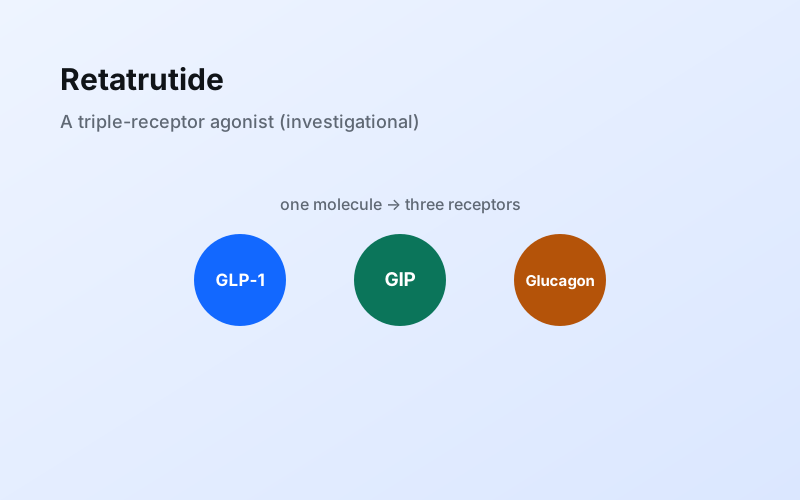
Retatrutide — often shortened to RETA — is one of the newest and most-discussed molecules in metabolic research. It belongs to the same broad family as semaglutide and tirzepatide, but goes a step further: it acts on three hormone receptors at once. Unlike most compounds in a research catalogue, it has already been studied in published human clinical trials, so the evidence picture here is different from the typical peptide.[1]
What "triple agonist" means
An agonist is a molecule that switches a receptor on. Retatrutide is engineered to activate three different receptors that all influence metabolism:
- GLP-1 receptor — the target of semaglutide; involved in insulin release and the feeling of fullness.
- GIP receptor — the second incretin hormone; part of what tirzepatide adds on top of GLP-1.
- Glucagon receptor — the new third target; linked to how the body expends energy.
The design idea is that hitting all three pathways with one molecule may do more than hitting one or two. That progression — single, dual, then triple — is the simplest way to place retatrutide in context.
What the published research reported
A phase-2 randomized trial published in the New England Journal of Medicine in 2023 studied retatrutide in adults with obesity and reported substantial, dose-dependent reductions in body weight over 48 weeks, alongside a gastrointestinal side-effect profile broadly similar to other incretin drugs.[2] Additional trials in type-2 diabetes and liver-fat conditions have also been reported. This is a genuinely clinical evidence base — but it is phase-2/phase-3 investigational data, not a finished, approved product.
Where things stand
As of writing, retatrutide is investigational: it is progressing through late-stage clinical trials and is not an approved medicine. Material sold for research is exactly that — a laboratory reference compound, not a therapeutic. The trial results are promising and real, but "in trials" is not the same as "approved and available."
Handling in the lab
RETA is supplied as a lyophilized powder and is handled like other research peptides — kept cold and dry, reconstituted only as needed (see reconstitution and storage stability), and evaluated against its certificate of analysis. The catalogue listing is on the RETA product page.
For research use only. Not for human or veterinary use. Retatrutide is an investigational compound not approved for any use. This article summarizes published clinical literature for educational purposes and is not medical advice or a recommendation of use.
References
- National Center for Biotechnology Information. "Retatrutide compound summary." PubChem. pubchem.ncbi.nlm.nih.gov.
- Jastreboff AM, Kaplan LM, Frías JP, et al. "Triple–Hormone-Receptor Agonist Retatrutide for Obesity — A Phase 2 Trial." New England Journal of Medicine, 2023. nejm.org.
- U.S. National Library of Medicine. "Retatrutide clinical trials." ClinicalTrials.gov. clinicaltrials.gov.