What Is GLOW? The BPC-157 + TB-500 + GHK-Cu Blend Explained
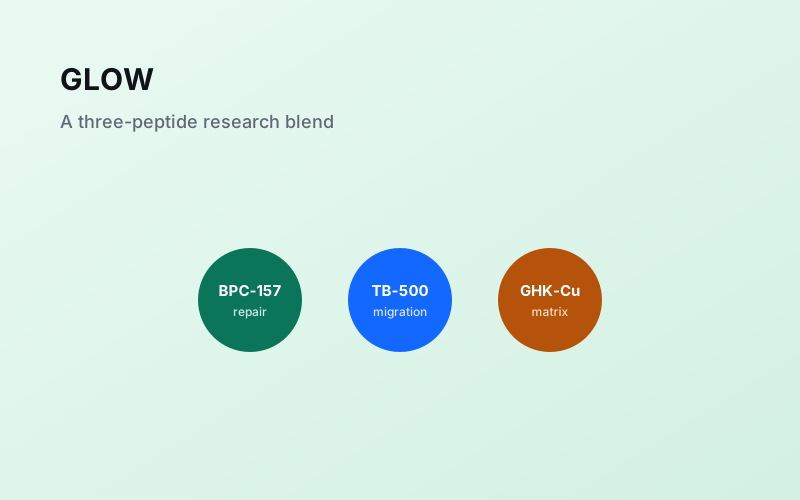
GLOW is not a single peptide — it is a blend of three: BPC-157, TB-500, and GHK-Cu, combined in one vial. Blends are a common format in peptide research because they let a study work with a fixed, repeatable combination rather than mixing components by hand. This profile breaks down what each of the three is and why they are grouped together.
The three components
- BPC-157 — a pentadecapeptide studied in animal models for soft-tissue repair and angiogenesis (new blood-vessel formation).
- TB-500 — a synthetic fragment of Thymosin Beta-4, a protein that binds actin (part of a cell's internal scaffold). It is studied for cell migration and tissue-repair processes.[1]
- GHK-Cu — the copper tripeptide, studied for extracellular-matrix remodeling and collagen signalling.
Why these three
The logic of the GLOW combination is that its components sit at different stages of the same tissue-repair story: signalling new circulation (BPC-157), supporting the cell movement that rebuilds tissue (TB-500), and remodeling the surrounding matrix (GHK-Cu). Whether combining them produces effects beyond the individual peptides is exactly the kind of question a fixed blend is designed to let researchers study.
Blends vs. single peptides
A blend is convenient and consistent, but it also means you cannot vary one component independently — the ratio is fixed by the vial. For research that needs to isolate a single variable, the individual peptides are the better fit; for work with the combination as a defined unit, a blend removes mixing error. Neither GLOW nor its components are approved drugs; all are research materials.
Handling in the lab
GLOW is supplied as a single lyophilized blend and is handled like any peptide — cold, dry storage and prompt use after reconstitution (see reconstitution and storage stability). A closely related four-peptide blend, KLOW, adds the anti-inflammatory tripeptide KPV. The catalogue listing is on the GLOW product page.
For research use only. Not for human or veterinary use. This article is educational and summarizes published literature; it does not describe or recommend any use in humans and is not medical advice.
References
- Goldstein AL, Hannappel E, Kleinman HK. "Thymosin β4: actin-sequestering protein moonlights to repair injured tissues." Trends in Molecular Medicine. PubMed.
- National Center for Biotechnology Information. "Thymosin beta-4 fragment and copper peptide summaries." PubChem. pubchem.ncbi.nlm.nih.gov.