What Is KLOW? The Four-Peptide Blend Explained
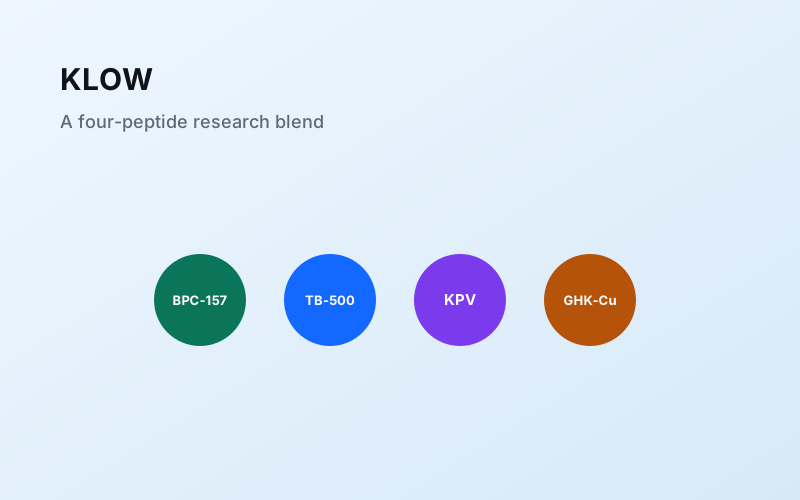
KLOW is a four-peptide research blend and the close cousin of GLOW. It contains the same three repair-oriented peptides — BPC-157, TB-500, and GHK-Cu — plus one addition that changes its character: KPV. This profile explains all four components and what that fourth peptide brings.
The four components
- BPC-157 — a pentadecapeptide studied for soft-tissue repair and angiogenesis.
- TB-500 — a Thymosin Beta-4 fragment studied for cell migration and tissue repair.
- KPV — a tripeptide (lysine-proline-valine) that is the tail end of the hormone α-MSH. Unlike the other three, KPV's research focus is anti-inflammatory signalling rather than structural repair.[1]
- GHK-Cu — the copper tripeptide studied for matrix remodeling and collagen.
What KPV adds
The single difference between GLOW and KLOW is KPV, and it is a meaningful one. The other three peptides are studied largely around building and repairing tissue; KPV is studied around calming inflammation. Research interest in KPV centers on its reported ability to dial down inflammatory signalling — notably in models of gut inflammation — without the immune-suppressing breadth of larger anti-inflammatory molecules.[2] Conceptually, KLOW pairs a repair-oriented core with an inflammation-oriented addition.
Blends vs. single peptides
As with any blend, KLOW's four-way ratio is fixed in the vial — convenient and repeatable, but not adjustable component-by-component. Research that needs to isolate one variable is better served by single peptides; research treating the combination as one defined unit benefits from the blend format. None of the components, nor the blend, is an approved drug; all are research materials.
Handling in the lab
KLOW is supplied as a single lyophilized blend and stored cold and dry, with prompt use after reconstitution (see reconstitution and storage stability). For the three-peptide version without KPV, see GLOW. The catalogue listing is on the KLOW product page.
For research use only. Not for human or veterinary use. This article is educational and summarizes published literature; it does not describe or recommend any use in humans and is not medical advice.
References
- National Center for Biotechnology Information. "KPV tripeptide compound summary." PubChem. pubchem.ncbi.nlm.nih.gov.
- Dalmasso G, Charrier-Hisamuddin L, et al. "PepT1-mediated tripeptide KPV uptake reduces intestinal inflammation." Gastroenterology. PubMed.
- Goldstein AL, Hannappel E, Kleinman HK. "Thymosin β4: actin-sequestering protein moonlights to repair injured tissues." Trends in Molecular Medicine. PubMed.